

Preserve Your Vietnam Memories
Turn your travel photos into beautiful custom magnets
A unique service available throughout Vietnam - simply send your favorite travel shots and receive beautiful, high-quality magnets at budget-friendly prices. Perfect for sharing with friends or decorating your space with travel memories.
Contact us on:
Hidden Gems: Pu Luong & Mu Cang Chai Nature Reserves
If you're dreaming of Vietnam's iconic rice terraces but want to escape the tourist crowds of Sapa, you've found your answer. Pu Luong Nature Reserve and Mu Cang Chai offer everything that makes Northern Vietnam magical - cascading emerald rice paddies, traditional ethnic minority villages, dramatic mountain landscapes, and authentic cultural experiences - without the endless tour buses and selfie sticks.
These two hidden gems represent the best of what Northern Vietnam has to offer adventure seekers and nature lovers. Pu Luong, just three hours from Hanoi, provides accessible trekking through lush valleys dotted with Thai and Muong villages, while Mu Cang Chai, further northwest, showcases some of the most photographed rice terraces in all of Southeast Asia. Both destinations offer a glimpse into rural Vietnamese life that has remained largely unchanged for centuries, where water buffalo still plow fields, traditional stilt houses dot the hillsides, and the rhythm of life follows the rice growing seasons.
What makes these destinations truly special isn't just their stunning natural beauty - it's the opportunity to experience authentic village life through homestays, share meals with local families, trek through landscapes where you might not see another tourist all day, and contribute directly to community-based tourism initiatives that benefit local people. This is Vietnam as it was before mass tourism, and it won't stay this way forever.
Why Visit Pu Luong & Mu Cang Chai
- Fewer tourists, more authentic experiences: While Sapa sees thousands of visitors daily, these destinations remain relatively undiscovered, offering genuine interactions with local communities
- Spectacular rice terraces: Mu Cang Chai's terraces are considered among the most beautiful in the world, while Pu Luong offers equally impressive landscapes without the crowds
- Best for photography: Golden and green terraces cascading down mountainsides create dream-like compositions, especially during sunrise and sunset
- Immersive homestay experiences: Stay in traditional stilt houses, share meals with Thai and H'mong families, and participate in daily village activities
- Excellent trekking opportunities: Routes range from easy valley walks to challenging mountain trails, all with spectacular scenery and few other trekkers
- Community-based tourism: Your visit directly supports local families and sustainable tourism initiatives
- More affordable: Accommodation and food costs significantly less than in Sapa
- Year-round appeal: Each season offers different colors and experiences in the rice paddies
Pu Luong Nature Reserve: Your Gateway to Authentic Village Life
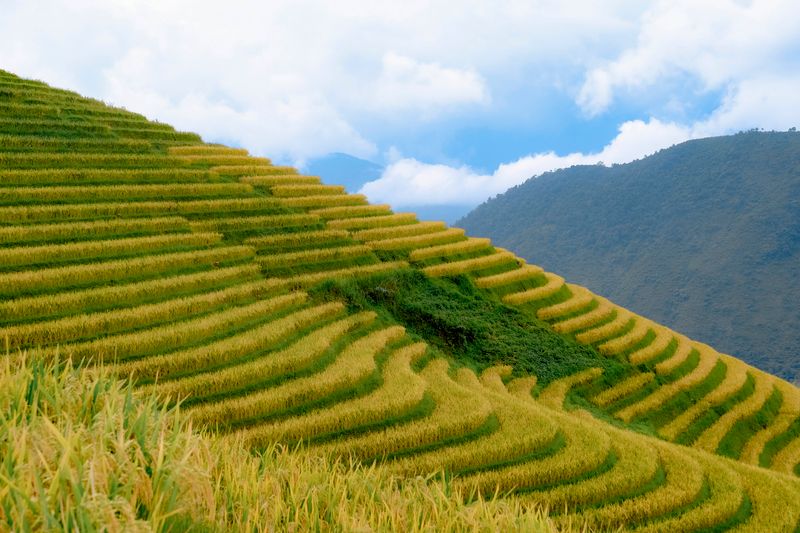
Located in Thanh Hoa Province, Pu Luong Nature Reserve feels like stepping into a National Geographic documentary. This 17,662-hectare reserve encompasses dramatic limestone karst mountains, terraced rice fields that seem to defy gravity, bamboo forests, and over a dozen traditional Thai and Muong villages where life revolves around rice cultivation and traditional crafts.
The Rice Terraces of Pu Luong
Pu Luong's terraces differ from those in Sapa or Mu Cang Chai - instead of the dramatic sweeping curves visible from distant viewpoints, here you walk among them, following narrow paths between paddies, crossing bamboo bridges, and experiencing the terraces at eye level. During the growing season (May-October), the terraces transform from muddy brown to electric green to golden yellow, with each phase offering unique photographic opportunities.
The most photographed terraces surround the villages of Kho Muong and Hieu, where the valley opens up to reveal layer upon layer of carefully carved paddies descending toward the valley floor. Early morning mist often fills the valleys, creating ethereal scenes as the sun burns through, revealing farmers already at work in the fields.
Must-Visit Villages
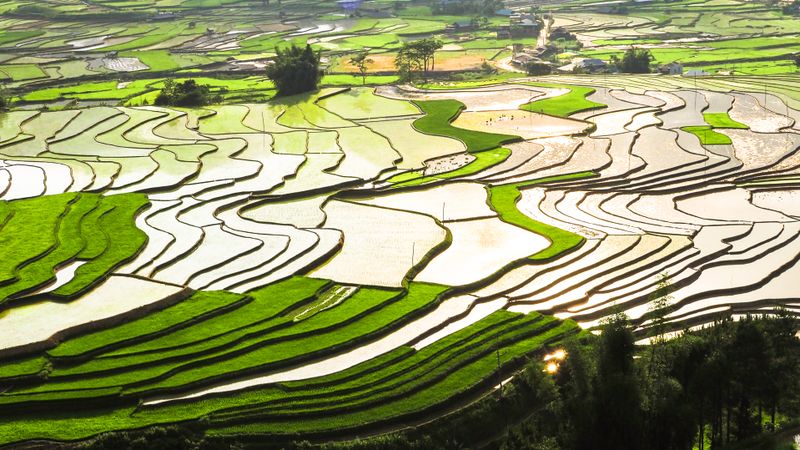
Kho Muong Village sits at the heart of Pu Luong's most spectacular valley. The approach on foot from the main road takes you past working rice terraces and through bamboo forests, with the village's traditional Thai stilt houses emerging as you round a bend. Most families here participate in homestay programs, offering simple but comfortable accommodations, home-cooked meals, and genuine hospitality. The village is also known for its bamboo water wheels - ingenious traditional irrigation devices that lift water from streams to higher terraces.
Hieu Village perches on a hillside with commanding views across terraced valleys. It's slightly more developed for tourism than Kho Muong but remains authentically traditional. The village is an excellent base for longer treks and mountain biking routes. In the evenings, families often gather on their wooden terraces for rice wine and conversation - visitors are always welcome to join.
Don Village offers the most remote and traditional experience in Pu Luong. Getting here requires either a longer trek or motorbike ride on rough roads, but you'll be rewarded with fewer visitors and even more authentic village life. The villagers here maintain traditional weaving practices, and you can often watch women working at looms in the shaded areas beneath their stilt houses.
Trekking Routes and Difficulty Levels
Easy Routes (2-4 hours)
- Kho Muong to Hieu Village: A gentle 4km walk following valley paths through rice terraces, suitable for all fitness levels. This is the most popular route and showcases Pu Luong's classic scenery.
- Village Loop Walks: Most villages offer 1-2 hour loops that explore surrounding terraces and forests, perfect for early morning or late afternoon walks.
Moderate Routes (4-6 hours)
- Don Village Trek: A more challenging 8km route with some steep sections and stream crossings, passing through bamboo forests and multiple villages.
- Mountain Ridge Trek: Follows higher elevation trails with panoramic valley views, requiring moderate fitness but offering spectacular photography opportunities.
Challenging Routes (6-8 hours)
- Full Valley Traverse: Links multiple villages via mountain trails, with significant elevation gain and loss. Best done with a local guide.
- Peak Ascents: Several peaks around Pu Luong offer challenging day hikes with 360-degree mountain views, though trails are not always well-marked.
Practical Information for Pu Luong
Entrance Fee: 30,000 VND (approximately $1.50 USD) per person
Best Season: May to October for rice growing season. June-July for green terraces, September-October for golden harvest season.
Getting There:
- From Hanoi: 3-3.5 hours by private car (140km)
- Bus to Mai Chau, then local transport to Pu Luong
- Many visitors combine with Mai Chau for a longer trip
Mu Cang Chai: Vietnam's Most Spectacular Rice Terraces
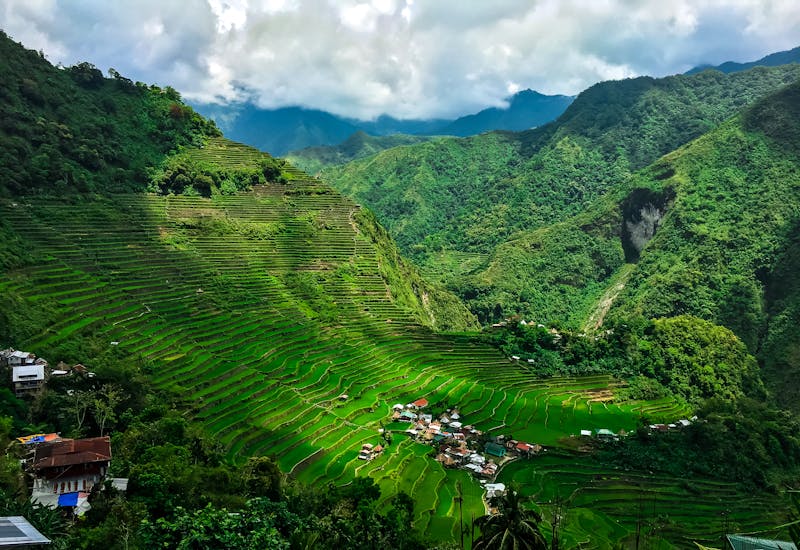
If Pu Luong is intimate and accessible, Mu Cang Chai is grand and dramatic. Located in Yen Bai Province on the famous northwest loop route, Mu Cang Chai has earned recognition as a national heritage site for its rice terrace landscapes. These aren't just rice fields - they're agricultural masterpieces carved over centuries by H'mong farmers into steep mountainsides, creating sweeping golden curves that seem to flow like waves across the landscape.
The Terraces: A Living Work of Art
Mu Cang Chai's terraces are different in scale and drama from anywhere else in Vietnam. Massive in scope, they cascade down entire mountainsides in perfectly geometric patterns, best appreciated from the numerous viewpoints along Highway 32 that connects the region. Each terrace follows the natural contours of the mountains, creating organic patterns that change with every shift in perspective.
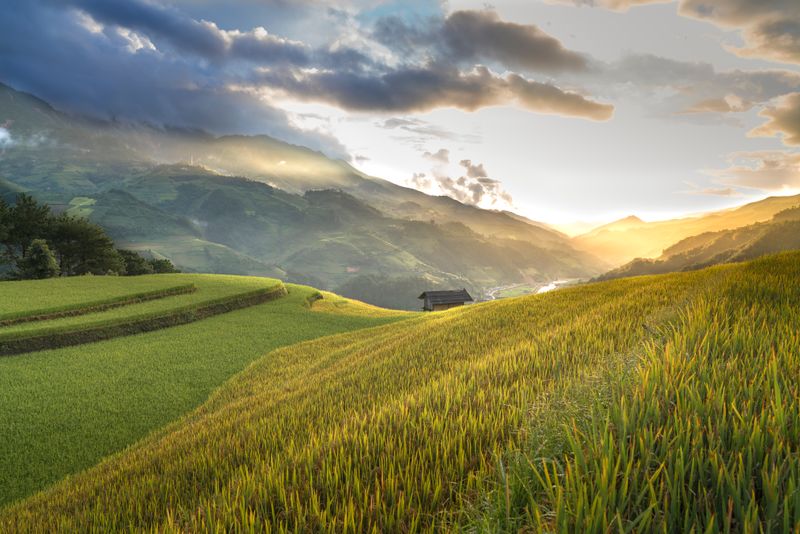
The most famous viewpoints include La Pan Tan, Che Cu Nha, and De Xu Phinh - each offering different but equally stunning perspectives on the terrace systems. During peak season, photographers arrive before dawn to capture the terraces emerging from morning mist, with the early light painting the golden rice paddies in warm amber tones.
Best Viewpoints and Photography Spots
La Pan Tan Viewpoint is the most photographed location in Mu Cang Chai, and for good reason. From this elevated roadside stop, you can see terraces flowing down the valley in perfect curves, with the small village of La Pan Tan nestled at the bottom. The best light occurs early morning (6-8am) and late afternoon (4-6pm) when the sun creates long shadows that emphasize the terraces' three-dimensional forms.
Che Cu Nha Viewpoint offers the most panoramic perspective, with multiple valleys visible and terraces extending in every direction. This is where you truly understand the massive scale of Mu Cang Chai's terrace systems. On clear days, you can see dozens of H'mong villages scattered across distant hillsides.
De Xu Phinh is less crowded than La Pan Tan but equally beautiful, with terraces that seem to spiral up the mountainside. This viewpoint is also excellent for sunset photography.
Lim Mong Village provides a different perspective - instead of viewing from above, you walk among the terraces and through the village, experiencing the landscape from ground level. The village also offers authentic homestay experiences.
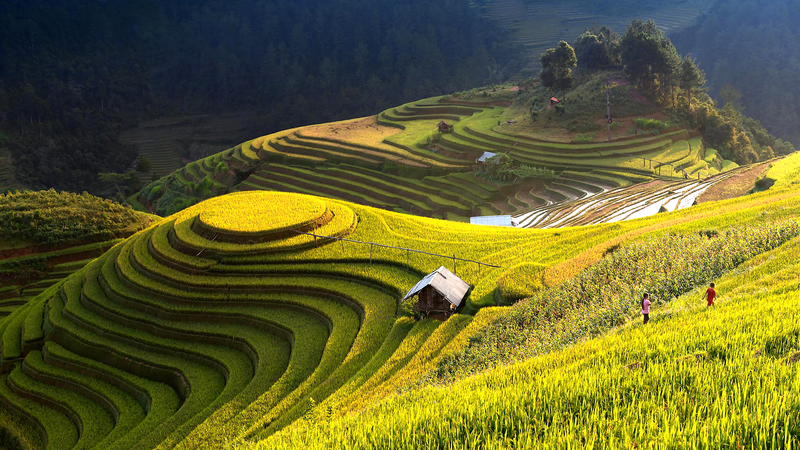
Harvest Season: The Golden Period
While Mu Cang Chai's terraces are beautiful year-round, the harvest season (mid-September through early October) transforms them into liquid gold. This is when photographers from around the world descend on the region, and for good reason - the rice turns brilliant yellow, creating a spectacular color palette against the green mountains and blue sky.
During harvest, the terraces become hives of activity. Families work together cutting rice, threshing it on wooden platforms, and carrying it in massive baskets up steep mountain paths. This is working agriculture on a spectacular scale, and visitors who arrive during this period can participate in or photograph the harvest activities with permission from local families.
The exact timing of the harvest varies slightly by elevation and weather, so check current conditions before planning your trip. Mid to late September is typically the safest bet for peak golden color.
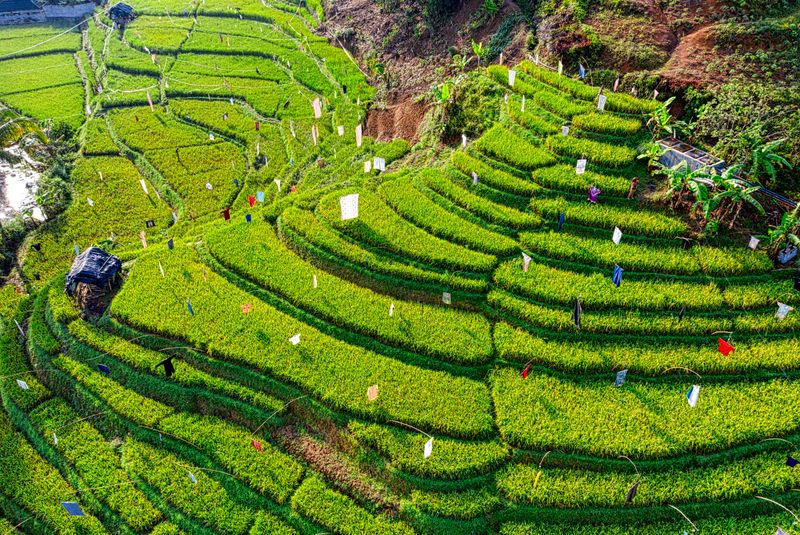
H'mong Village Experiences
Unlike the Thai villages of Pu Luong, Mu Cang Chai is home to H'mong people, one of Vietnam's most distinctive ethnic minority groups. The H'mong maintain strong cultural traditions, including intricate textile arts, traditional dress, and unique agricultural practices.
Several villages offer homestay experiences, though they're more basic than in Pu Luong due to the region's remoteness. Expect simple sleeping arrangements (often shared rooms with mat beds), basic bathrooms (sometimes outside toilets), and simple but filling meals. The trade-off is extremely authentic cultural immersion - you'll likely be the only travelers in the village, and families are genuinely interested in cultural exchange.
La Pan Tan Village is the most accessible for homestays, with a handful of families offering accommodations. The village sits at the bottom of the famous viewpoint, providing easy access to terrace trekking.
Lim Mong Village is more remote but offers deeper immersion. Getting here requires motorbike or arranged transport from Mu Cang Chai town.
Getting There: Transportation Guide
Reaching Pu Luong from Hanoi
Private Car (Recommended for comfort)
- Cost: $80-120 USD for round trip
- Duration: 3-3.5 hours one way
- Advantages: Door-to-door service, flexible schedule, can stop for photos
- Book through hotels or reputable tour operators
Bus and Local Transport
- Take a bus from Hanoi to Mai Chau ($5-7 USD, 3 hours)
- From Mai Chau, hire a motorbike taxi or arrange transport to Pu Luong ($10-15 USD)
- More adventurous but requires more planning
Motorbike (For experienced riders)
- Rent in Hanoi: $7-10 USD per day
- Route: Take Highway 6 towards Mai Chau, then secondary roads to Pu Luong
- Advantages: Freedom to explore, beautiful ride
- Challenges: Some rough roads, requires confident riding skills
Reaching Mu Cang Chai from Hanoi
Sleeper Bus
- Direct overnight buses from Hanoi to Mu Cang Chai town
- Cost: $15-20 USD one way
- Duration: 8-10 hours
- Buses leave Hanoi in evening, arrive early morning
- Book through hotels or online platforms
Private Car
- Cost: $180-250 USD for round trip
- Duration: 6-7 hours one way
- Best split over multiple days, stopping at other destinations (Nghia Lo, Tu Le)
Motorbike Loop (Most Popular for Adventure Travelers)
- Part of the famous Ha Giang/Northwest loop
- Typical route: Hanoi → Nghia Lo → Mu Cang Chai → Tu Le → back to Hanoi (3-5 days)
- Rent in Hanoi: $7-10 USD per day
- Requires strong riding skills - roads include mountain passes and sharp curves
- Most rewarding way to experience the region
Combining Both Destinations
While possible to visit both Pu Luong and Mu Cang Chai in one trip, they're in opposite directions from Hanoi. Most travelers choose one or the other based on time and interests:
- Choose Pu Luong if: You have limited time (2-3 days), prefer easier access, want more developed homestay options, or aren't comfortable with long bus rides or motorbike touring
- Choose Mu Cang Chai if: You have more time (4-5 days minimum), want the most dramatic rice terrace photography, are comfortable with basic accommodations, or are planning a longer Northwest loop trip
Best Time to Visit
Rice Season Overview (May-October)
Both destinations are most spectacular during the rice growing season when the terraces are filled with crops. The exact timing differs slightly between the two regions:
Planting Season (May-June)
- Terraces filled with water create mirror-like reflections
- Fewer tourists, lower prices
- Fresh green shoots begin emerging
- Weather can be rainy but dramatic with mist and clouds
Growing Season (July-August)
- Terraces turn brilliant green
- Fullest growth period
- Regular rain but also sunny days
- Good balance of scenery and weather
Harvest Season (September-October)
- Golden yellow terraces at peak beauty
- Most popular time for photographers
- Busiest season with higher prices
- Generally dry, clear weather
- Harvest activities in full swing
Dry Season (November-April)
The terraces are less visually striking during the dry season when fields are brown and empty, but these months offer advantages:
- Clearer weather, more reliable sunshine
- Better trekking conditions (less mud)
- Fewer tourists, especially in Pu Luong
- Lower accommodation prices
- Opportunity to see terrace maintenance and preparation work
Weather Considerations
Pu Luong: Hot and humid in summer (May-August), cooler and drier in winter. Rain is common during rice season but usually not all day.
Mu Cang Chai: Cooler than Pu Luong due to higher elevation. Can be quite cold in winter (December-February). Morning fog is common year-round, burning off by mid-morning.
Homestay Experiences and Village Etiquette
What to Expect from Homestays
Homestays in both Pu Luong and Mu Cang Chai offer authentic immersion into rural Vietnamese life, but expectations should be adjusted from standard hotels:
Accommodation
- Sleeping arrangements: Mat beds on wooden floors (Pu Luong) or basic beds (both locations)
- Mosquito nets provided
- Shared or basic private rooms
- Fans (air conditioning rare)
- Simple but usually clean facilities
Meals
- Included in most homestay packages
- Family-style meals with hosts
- Traditional dishes using local ingredients
- Vegetarian options available with advance notice
- Rice wine often offered in the evening (declining politely is fine)
Bathrooms
- Basic facilities, often cold water showers
- Some homestays have Western toilets, others squat toilets
- May be outside the main house
- Bring your own toiletries
Cost
- Pu Luong: $12-25 USD per person per night including meals
- Mu Cang Chai: $10-20 USD per person per night including meals
- More comfortable/newer homestays at higher end of range
Village Etiquette Guide
Do:
- Remove shoes before entering houses (always)
- Ask permission before photographing people or inside homes
- Offer to pay for photos if photographing people at work
- Try local foods even if unfamiliar
- Learn a few basic Vietnamese phrases
- Dress modestly (cover shoulders and knees)
- Accept offered hospitality graciously
- Bring small gifts from your country to share with host families
- Participate in activities if invited (harvesting, cooking, weaving)
Don't:
- Point your feet at people or religious items when sitting
- Touch people's heads (especially children)
- Show excessive physical affection in public
- Give money or candy directly to children (creates begging behavior)
- Photograph religious ceremonies without permission
- Refuse food without polite explanation
- Complain about basic facilities
- Display impatience with language barriers
Cultural Exchange Tips
The most meaningful homestay experiences come from genuine cultural exchange. Bring photos of your home and family to share, be curious about daily life and traditions, offer to help with daily tasks, and be patient with communication challenges. Most host families speak limited English, but hospitality transcends language barriers. Translation apps can help bridge gaps, and simple gestures and smiles go far.
Practical Tips for Your Visit
What to Pack
Essentials:
- Good hiking shoes or boots with grip (trails can be muddy)
- Lightweight rain jacket (even in dry season)
- Sun protection (hat, sunscreen, sunglasses)
- Insect repellent (mosquitoes present year-round)
- Reusable water bottle
- Basic first aid kit
- Headlamp or flashlight (villages have limited lighting)
- Power bank (electricity can be unreliable)
- Cash (ATMs limited or absent)
For Comfort:
- Sleeping bag liner for extra hygiene
- Quick-dry towel
- Wet wipes and hand sanitizer
- Your own toiletries
- Comfortable clothes that dry quickly
- Light layers for temperature changes
Photography Gear:
- Wide-angle lens for terrace landscapes
- Telephoto for detail shots and villagers at work
- Tripod for sunrise/sunset shots
- Plenty of memory cards and backup batteries
- Protective rain cover for camera
Money and Costs
Neither Pu Luong nor Mu Cang Chai has reliable ATMs, so bring sufficient cash from Hanoi. Larger denomination bills (500,000 VND) can be difficult to change in villages, so request smaller bills (50,000 and 100,000 VND) when withdrawing money.
Daily Budget Estimates:
- Budget: $20-30 USD (basic homestay, simple meals, minimal transport)
- Mid-range: $40-60 USD (comfortable homestay, some restaurant meals, hired transport)
- Comfortable: $80-100+ USD (best accommodations, private car, dining flexibility)
Connectivity and Communication
Cell phone coverage is limited in both areas, especially in villages. Some homestays offer WiFi, but it's often slow and unreliable. Consider this a digital detox opportunity. Download offline maps before arriving (Maps.me works well), and inform friends/family you'll be off-grid.
Health and Safety
Both regions are generally very safe. The main concerns are:
- Slips and falls on muddy terrace paths (wear proper shoes)
- Dehydration and sun exposure (stay hydrated, use sun protection)
- Mosquito-borne illness (use repellent, consider malaria prophylaxis for Mu Cang Chai)
- Motorbike accidents for riders (drive defensively, wear helmet)
Booking and Planning
When to Book:
- Pu Luong: Advance booking recommended for weekends and peak season (September-October)
- Mu Cang Chai: Advance booking essential for harvest season (late September), otherwise can arrange on arrival
Tour vs Independent:
- Pu Luong works well independently with basic planning
- Mu Cang Chai easier with organized tour if not doing motorbike loop
- Multi-day trekking benefits from local guide's knowledge
Travel Memories and Souvenirs
As you explore these stunning landscapes and authentic villages, you'll naturally capture hundreds of photographs documenting your journey through Vietnam's rice terraces. Beyond the typical souvenirs like handwoven textiles and bamboo crafts available in the villages, consider turning your favorite travel photos into custom magnets - a modern, personalized way to preserve your memories. This service is available throughout Vietnam at affordable prices with quick turnaround, making it easy to create tangible mementos of your adventure. Many travelers use these photo magnets as unique gifts or to decorate their homes with their favorite moments from the rice terraces and village experiences.

Responsible Tourism
Both Pu Luong and Mu Cang Chai remain relatively unspoiled precisely because they haven't been overwhelmed by tourism. As visitors, we have a responsibility to keep it that way:
Environmental Responsibility:
- Pack out all trash, including organic waste
- Use refillable water bottles, avoid single-use plastic
- Stay on marked trails to prevent erosion
- Don't pick plants or disturb wildlife
- Use biodegradable soap if bathing in streams
Cultural Responsibility:
- Pay fair prices for services and crafts
- Buy handicrafts directly from makers when possible
- Learn about and respect local customs
- Avoid photographs that could be exploitative
- Support homestays and local guides over outside tour companies
Community Impact:
- Spend money in villages, not just at viewpoints
- Tip appropriately for good service
- Share skills or knowledge if opportunities arise
- Provide thoughtful feedback to homestay operators
- Recommend responsible operators to other travelers
Making the Most of Your Visit
Slow Down
The biggest mistake travelers make in these regions is rushing. Three days in Pu Luong or four days in Mu Cang Chai allows you to truly experience village rhythms, take sunrise and sunset walks through terraces, share meals and conversations with local families, and discover the subtle beauties that aren't visible in a quick stop.
Early Mornings Matter
The best light, the most active village life, and the quietest trekking all happen in early morning (6-9am). The terraces emerge from mist, farmers are at work in the fields, and you'll have trails to yourself. After mid-morning, heat and haze reduce photographic opportunities.
Engage Authentically
These destinations shine through authentic interactions. Ask questions about rice cultivation, traditional crafts, and daily life. Offer to help with tasks. Share meals and stories with your host families. The landscapes are spectacular, but the people and their way of life are what make these places truly memorable.
Combine Activities
Don't just trek or just photograph. Try a cooking class, learn about traditional weaving, help with rice harvest if timing is right, visit a local market, or simply spend an afternoon reading on a terrace watching village life unfold below. The diversity of experiences makes the trip richer.
These hidden gems of Northern Vietnam won't remain hidden forever. Visit now, while they remain authentic, and travel responsibly to help ensure they stay that way for generations to come. Whether you choose Pu Luong's intimate valleys or Mu Cang Chai's dramatic terraces, you'll discover a Vietnam that few visitors ever experience - and you'll return home with memories that go far beyond photographs.